What you will learn
- 1What stem cells are
- 2Embryonic, adult and cord blood stem cells
- 3Potency levels of stem cells
- 4Medical uses, risks and ethical issues
Read
Stem cells are undifferentiated, self-renewing cells that can develop into specialised cells. They act as the body’s growth and repair system.
01
Types of Stem Cells
- Embryonic stem cells:
- Found in early embryos
- Pluripotent → can form any cell type
- Very useful in medical research
02
Adult stem cells
- Found in tissues like bone marrow
- They are multipotent which form a limited range of cells.
- Used in bone marrow transplants
03
Cord blood stem cells
Collected from umbilical cord blood
04
How Stem Cells Work
- They divide to produce more stem cells (self-renewal).
- They receive chemical signals that trigger differentiation into specialised cells (e. g., nerve, muscle, blood).
05
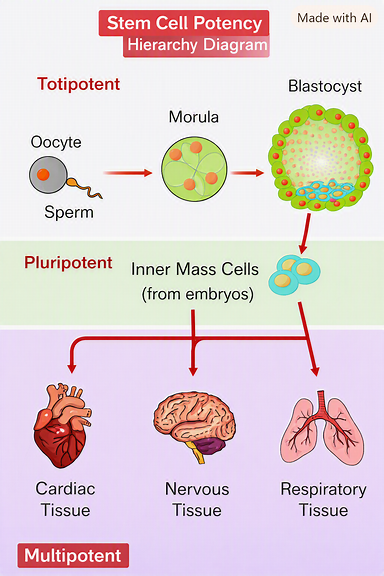
Potency Levels of stem cells
- Totipotent means they can form all cell types. Example: zygote/egg
- Pluripotent means they can form any body cell
- Multipotent has a limited range
- Unipotent means they have one cell type but still self-renewing
06
Medical Uses
- Treating blood cancers (leukaemia) using bone marrow transplants
- Repairing damaged tissues (heart muscle, nerve cells)
- Therapeutic cloning to produce genetically matched cells
- Research into diabetes, spinal injuries, Parkinson’s disease
07
Ethical Issues
- Embryonic stem cell use involves destroying embryos → moral concerns
- Adult stem cells avoid ethical issues but have limited potential
08
Debate balances medical benefit vs moral status of embryos
09
Risks
- Tumour formation if cell division becomes uncontrolled
- Immune rejection if cells are not patient-matched
- Ethical concerns for embryonic sources
10
Clinical Applications
- Regenerative Medicine
- Replacing damaged tissues (heart, spinal cord, retina)
- Creating lab-grown organs (research stage)
11
Disease Modelling
- Stem cells used to grow “mini-organs” (organoids)
- Helps study diseases like Alzheimer’s, cancer, cystic fibrosis
12
Drug Testing
Stem-cell-derived tissues allow safer drug trials before human testing
13
Gene Therapy and Stem Cells
- Combine stem cells with gene editing (CRISPR)
- Correct genetic defects → re-implant corrected cells